If you’ve just taken on a bigger block, or you’re tired of a walk behind mower not keeping up, the choice usually comes down to two options: a ride on or zero turn mower, or a compact tractor. Both will get the grass cut. They’re not really the same purchase though, and the right answer depends less on brand preference and more on a handful of practical factors about your property and what else you need done besides mowing.
This isn’t a case for one over the other in every situation. It’s a rundown of what actually separates them, so you can work out which one fits your block, your budget, and the jobs you’re actually likely to face over the next few years rather than just this weekend’s mowing.
What are you actually trying to achieve
This is the first question worth answering honestly, because it changes everything else. If mowing is genuinely the only job, a ride on or zero turn mower is built specifically for that and does it faster than a tractor with a mower deck, since a zero turn in particular can pivot on the spot and doesn’t need the wide turning circle a tractor does. If mowing is one job among several, and you’re also expecting to move materials, dig post holes, clear fallen branches, or use a loader at some point, a tractor starts making a lot more sense, because a mower is genuinely a one trick machine while a tractor is a base you build capability onto.
It’s also worth being honest about how the property is likely to be used a year or two from now, not just today. Plenty of people buy their first mower to keep on top of a new block, only to find themselves wanting a loader within months once fencing, garden beds, driveway repairs or storm clean up turn into actual jobs rather than hypotheticals. That’s not a criticism of buying a mower first, sometimes it genuinely is the right call, it’s just worth factoring into the decision rather than assuming the property’s needs will stay exactly as simple as they are on day one.
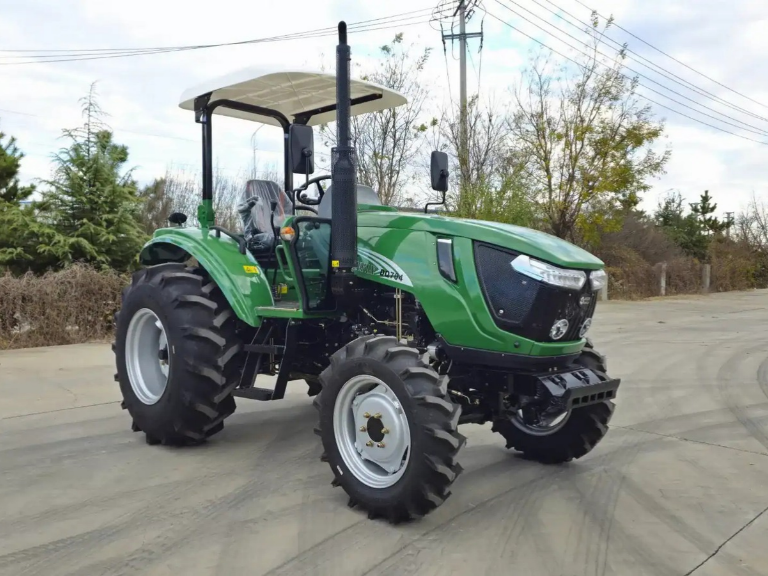
AgKing’s smaller models, the 30hp AK304, the 40hp AK404, the 50hp AK504 and the 55hp AKLZ554, along with the Enfly 40hp DQ404 and 55hp DQ554, sit in the size range most likely to be cross shopped against a ride on mower, since they’re compact enough to manoeuvre on a smaller block but still built around a full 3 point linkage and front end loader rather than just a mowing deck. All of them run 4 wheel drive as standard, along with power steering and a shuttle shift gearbox, which keeps everyday driving closer to a car than a piece of heavy machinery, an important point for anyone who’s never driven a tractor before and is weighing that learning curve against a mower’s more familiar steering wheel and pedal layout.

Property size and terrain
Mower manufacturers generally pitch zero turn mowers at properties from around half an acre up to a few acres, and they’re genuinely quick on that scale, particularly on open, obstacle free ground, since a zero turn can pivot on the spot rather than needing a three point turn at the end of every row. Once a property runs past a few acres, or includes any real slope, the comparison starts shifting. A compact tractor’s four wheel drive, wider stance and lower centre of gravity handle slopes and uneven ground with more stability than a mower, particularly a zero turn, which can lose traction on wet or steep sections because of how much weight sits over the rear wheels. If your block is genuinely flat and open, that advantage matters less. If it has any real incline, creek crossings, or rough, uneven paddock rather than lawn, a tractor is the more capable machine underneath the operator, mowing aside.
Safety on slopes and rough ground
This is worth its own mention rather than folding it into terrain, because it’s a genuine safety consideration rather than just a comfort one. Zero turn and ride on mowers sit higher relative to their wheelbase and carry more of their weight toward the rear, which is exactly the combination that makes them prone to tipping on slopes, wet grass or soft ground, a well documented risk with this style of mower generally. A compact tractor’s wider track, four wheel drive and lower centre of gravity make it inherently more stable on the same ground, and AgKing’s tractors add roll over protection as standard, either as a ROPS frame with a canopy on the entry models or a full cabin on the larger ones. None of this means a tractor is risk free, overloading a front end loader or working too close to a steep edge carries its own hazards, but if your property has genuine slope, wet low lying areas, or uneven ground rather than a flat suburban style lawn, that’s a real factor in the tractor’s favour beyond just cutting capability.
Ground conditions and time of year
This is where a lot of buyers underestimate the difference. A mower, especially a lighter zero turn, needs the ground to be reasonably dry to avoid rutting or getting bogged, which becomes a real limitation through a wet season or after heavy rain, right when grass is often growing fastest and most in need of cutting. A compact tractor’s weight is spread across four wheels rather than concentrated at the back, and options like AgKing’s Wide Industrial Tyres are built specifically for softer ground, which gives it more room to keep working when conditions turn. Standard Industrial Tyres and Turf Tyres are also available if softer ground isn’t a regular issue and everyday grip and lawn protection matter more. If your property deals with genuinely wet stretches for part of the year, that’s a practical point in the tractor’s favour that has nothing to do with cutting speed, since a machine that can’t get out onto the ground doesn’t get anything mowed, no matter how quickly it would otherwise cut.
Engines, fuel and everyday running
Most ride on and zero turn mowers sold in Australia run on petrol, which keeps the machine light and the purchase price down, though it also means more frequent fuel stops if you’re covering serious ground. AgKing’s tractors run diesel engines across the range, including the four cylinder YTO diesel fitted to the larger models, which generally means better fuel efficiency and more low end torque for pushing through thick grass or towing a loaded implement, at the cost of a heavier, more expensive machine to begin with. Servicing follows a similar pattern, a mower’s smaller engine is simple and cheap to maintain, while a tractor is a bigger investment to service but is built for far more running hours over its life, and AgKing backs that with onsite diesel mechanics, or lets you use your own without affecting the warranty. Comfort over a long session is worth a mention too, AgKing’s cabin models add air conditioning and heating, which matters far more on a hot afternoon spent doing several jobs than it would for a quick mow, where most riders are back inside within the hour regardless of what they’re sitting on.
What else is on your to do list
This is usually the deciding factor, and it’s worth being honest about your actual to do list rather than just today’s job. A ride on mower does one thing. A compact tractor, fitted with AgKing’s Euro quick hitch front end loader, can swap between a bucket for moving material, pallet forks, a bale grab, or a post hole digger, all without buying a second machine. On AgKing’s 40hp AK404, for example, the front end loader carries a 400kg safe working load and a 600kg maximum lift load, enough for moving mulch, gravel, feed or building materials around the property, and that capacity scales up through the range as horsepower increases. Fencing a new paddock, shifting mulch or gravel, clearing storm damage, spreading fertiliser, or towing a loaded trailer are all jobs a mower simply can’t do, and they’re exactly the jobs that tend to show up within the first year of owning acreage even if they weren’t part of the original plan. If any of that sounds familiar, or even likely, a tractor is the machine that can actually grow with the property instead of becoming the second machine you buy once the mower turns out not to be enough.
Budget and long term value
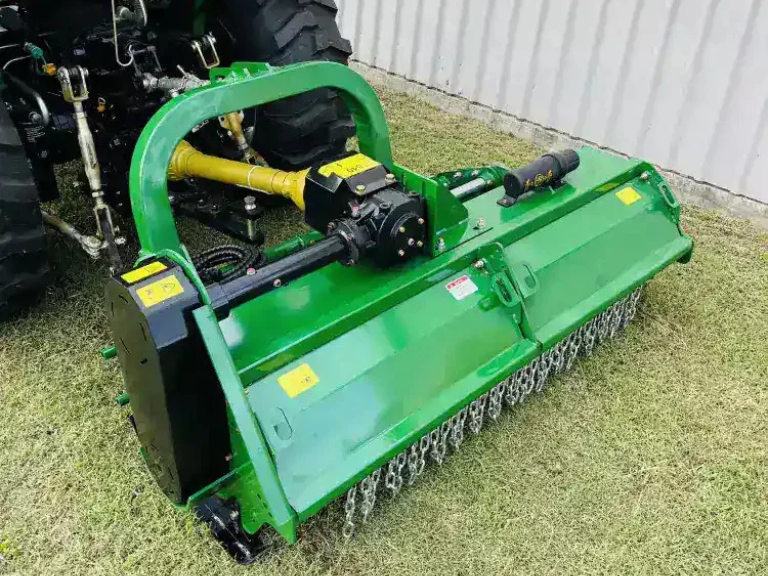
On sticker price alone, a ride on or zero turn mower is usually the cheaper purchase, and if mowing really is the only job, that’s a fair trade. Where the comparison changes is over the life of the machine. A tractor bought as a package, AgKing’s smaller models start from the low twenty thousands with a front end loader and slasher included, does the mowing job plus everything an implement can be bolted onto, which spreads that cost across a lot more capability than a mower ever will. Adding a second or third implement later, a post hole digger, a bale grab, a grader blade, is a far smaller incremental cost than buying an entirely second machine, which is effectively what happens if a mower owner later decides they need loader capability too.
It’s also worth factoring in what happens at resale and what breaks down the cost over time. A well maintained compact tractor holds value reasonably well and keeps earning its keep for a decade or more of typical hobby farm use, while a mower’s mowing deck and engine tend to wear faster given how often it’s actually running, since it’s usually the only tool doing the job rather than sharing the workload across several implements. AgKing’s tractors and implements also carry a genuine warranty, 36 months on the tractor and 12 months on implements, with parts held in Australia, which is worth weighing against a mower’s typically shorter cover when you’re comparing running costs rather than just the purchase price.
A quick way to decide
If your property is small, flat, and mowing is genuinely the only job you need done, a ride on or zero turn mower is the simpler, cheaper, and frankly better tool for that single task. If your block has any real size, slope, or soft ground, or if there’s a reasonable chance you’ll need to move material, dig, fence, or use a loader at some point, a compact tractor is the machine that covers the mowing and everything that comes after it. Plenty of properties end up with both eventually, a tractor for the paddock and heavier jobs, and a mower for the actual lawn around the house, but if you can only justify one machine to start with, the honest answer is to buy for the full list of jobs on your property, not just the one in front of you this weekend.
Worth asking yourself before you decide: how big is the area, what does the ground do after rain, is there any slope worth mentioning, and what’s the longest list of jobs you can realistically imagine needing done in the next couple of years. Answer those honestly and the choice between the two usually becomes fairly clear on its own.
If you’re still weighing it up, it’s worth talking through your property size, ground conditions and the jobs you expect to do over the next year or two with the AgKing team, since that conversation usually settles the decision faster than comparing spec sheets alone.