Queensland is a big call to make in one sentence. It can mean a two acre lifestyle block in the Sunshine Coast hinterland with rain most weeks of the year, or it can mean a cattle run out past Longreach where the dust never really settles and the nearest town is an hour’s drive away. AgKing supplies tractors right across that range, from the coast to the outback, and while a lot of the fundamentals stay the same wherever you are in the state, a few genuine differences show up once you start comparing horsepower, cabin setup, tyres, and even which implements get the most use.
This guide walks through what actually changes as you move from a humid coastal block to a drier inland property, using AgKing’s own AgKing and Enfly ranges as the reference point rather than generic tractor advice that could apply anywhere in the country.
Two very different Queenslands
Queensland’s coastal strip, running from the Gold Coast hinterland up through the Sunshine Coast, the Wide Bay region and further north, sits in a humid subtropical to tropical climate. Rain is more frequent, humidity stays higher for longer, and grass and pasture grow fast for most of the year. Properties along this strip also tend to be smaller. A lot of coastal and hinterland blocks are lifestyle properties or small hobby farms, often subdivided off larger holdings, running from a couple of acres up to twenty or thirty.
Head west past the Great Dividing Range and the picture changes fast. Rainfall drops away, the country opens right up, and properties get a lot bigger. Grazing runs and broadacre operations out around Charleville, Longreach, Winton and further west are commonly measured in the thousands of acres rather than single digits. Heat, dust and distance from town become part of the daily routine rather than the exception.
In between the two, there’s a huge middle ground too. Regional centres like Toowoomba, Bundaberg and Rockhampton sit somewhere between coastal humidity and true outback dryness, with their own mix of grazing country, cropping land and acreage properties. A lot of AgKing’s customers fall somewhere along this middle stretch rather than at either extreme, which is exactly why the range is built as wide as it is.
Neither end of the state is harder to farm than the other. They are just different jobs, and a tractor set up well for one doesn’t automatically suit the other.
Horsepower and property size shift first
The most obvious change is horsepower, and it tracks fairly closely with property size.
On a smaller coastal or hinterland block, AgKing’s lighter models tend to be the better fit. The 30hp AK304, the 40hp AK404, the 50hp AK504 and the 55hp AKLZ554 from the AgKing range, alongside the Enfly 40hp DQ404 and 55hp DQ554, are sized for maintaining a few acres to a few dozen acres rather than opening up new paddocks. They are also easier to manoeuvre on a tighter, more subdivided block where you might be working close to fence lines, sheds and neighbouring properties.
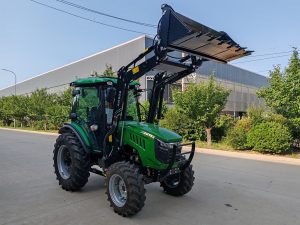
Once you are managing hundreds or thousands of acres further inland, the workload changes completely. Paddocks are bigger, jobs like slashing, spreading and moving materials cover far more ground per session, and heavier implements need more lift capacity and torque behind them. This is where AgKing’s larger models earn their keep. The 70hp AK704, the 90hp AK904 range (also available as the AK904PD, AK904C and AK904R depending on configuration) and the 130hp AK1304C, along with the Enfly 90hp DQ904, are built to shift more work per pass. The DQ904 in particular runs a heavier duty transmission system with planetary drives on the front axles, which is the kind of feature that matters more once you are consistently working a bigger, tougher property rather than tackling the odd job on a small block.
Dust and heat change what belongs in the cabin
This is where inland and outback conditions really start asking for different equipment.
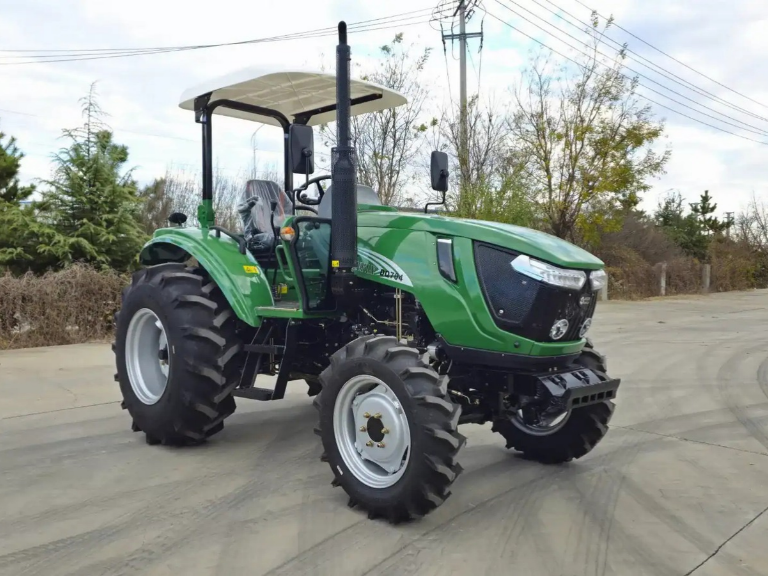
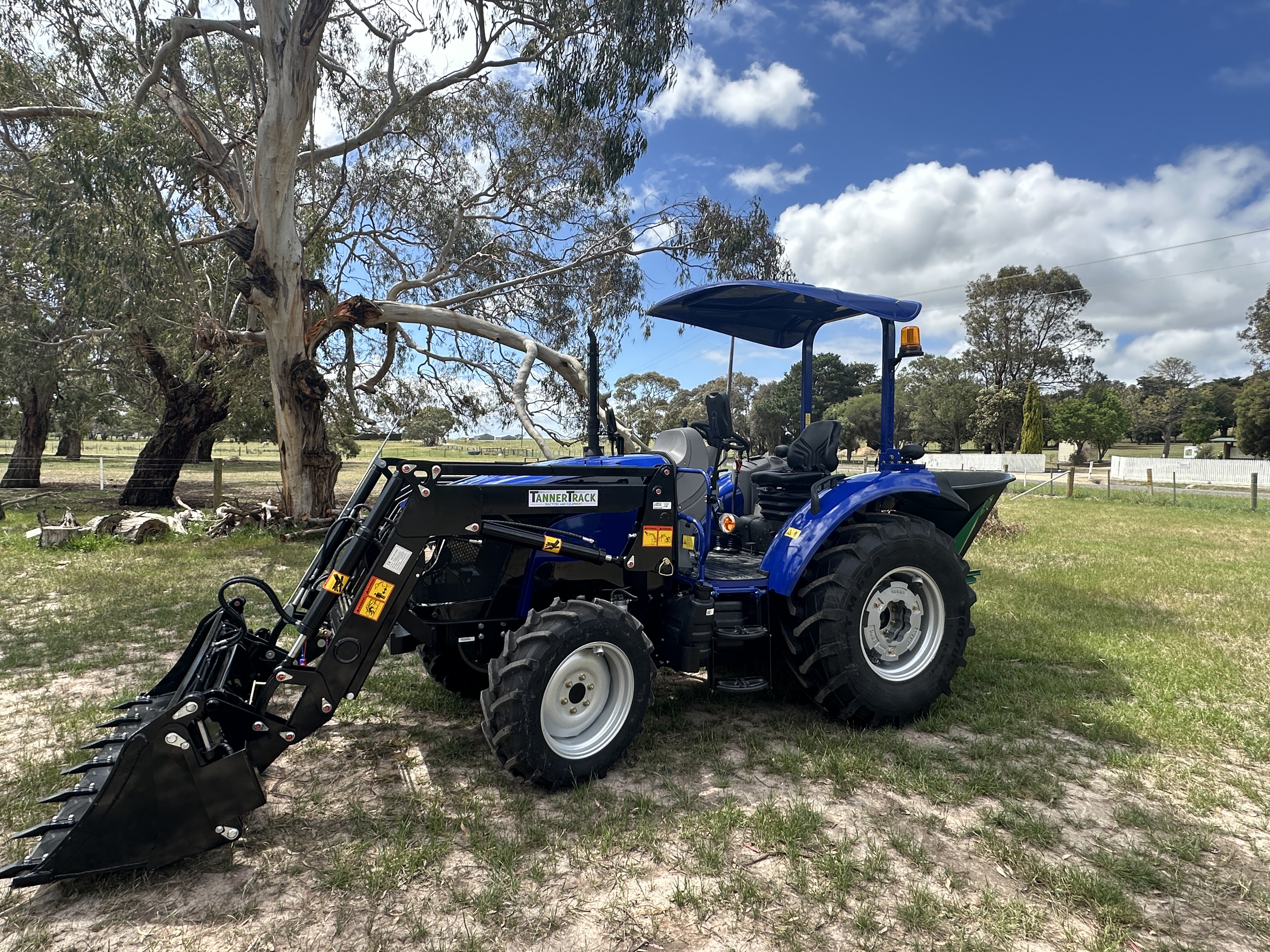
Dust is a constant out west, and it is hard on an engine that isn’t set up to cope with it. AgKing’s 90hp AK904PD is built with a twin filter air intake system, exactly the kind of feature that earns its keep on a dusty inland property where a single filter would need constant attention. Heat is the other factor. AgKing’s cabin models, including the 60hp AK604, the 70hp AK704 Cabin and the 90hp AK904 and DQ904, come with air conditioned cabins that cool in summer and heat in winter, which matters a lot more once you are regularly working through the high thirties than it does on a milder, breezier coastal block. Several of the cabin models also add tinted windows, a full LED lighting package and a larger radiator, features that line up well with long, hot days and the early starts a lot of outback operators use to get the bulk of the work done before the worst of the afternoon heat.
Fuel and water access also become a more serious consideration the further inland you go, simply because the next town, and the next fuel stop, might be a long drive away. The detailed spec sheet for the AK904 lists a 140 litre fuel tank and a larger radiator, which together give a decent buffer for a full day’s work without needing to plan a trip back to town part way through the job. Under the bonnet, the heavier AgKing and Enfly cabin models run a four cylinder YTO diesel engine, paired on the AK904 with a hydraulic three point linkage that includes a floating function, front and rear hydraulic remotes, and roll over protection as standard, all reasonable things to want on a machine that might be working a long way from help.
None of this means coastal buyers don’t want a comfortable cabin. Plenty do, and features like the AK604’s tinted windows, Apple CarPlay integration and LED digital dash show up on coastal orders too. It’s just that air conditioning and a proper air intake setup tend to be a genuine bonus on the coast rather than the deciding factor they often become further west.
What the coast asks for instead
Coastal and hinterland properties have their own set of priorities, and they lean less on heat and dust and more on ground conditions and how often the mower actually gets used.
Higher rainfall and humidity mean grass and pasture grow faster for more of the year along the coast, so implements like AgKing’s slashers, flail mowers and finishing mowers tend to get more regular use than they would on a drier inland block, where growth slows right down for months at a time. Ground conditions can also be softer, particularly on low lying or sandy coastal blocks, which is where AgKing’s Wide Industrial Tyres come in. This is an accessory built for soft ground and beach style conditions rather than firm, dry inland soil. Standard Industrial Tyres and Turf Tyres are also available across the range for buyers who want a bit less flotation and a bit more everyday grip on firmer coastal lawns and paddocks.
Manoeuvrability tends to matter more here too. A lot of coastal and hinterland blocks are subdivided, with tighter access, established gardens and closer neighbours, so the smaller AgKing and Enfly models, paired with the Euro quick hitch front end loader fitted across the range, make it easy to swap between a bucket, forks or a slasher without much fuss on a tighter block.
Implements that shift with the ground you’re on
The tractor is only half the story. What gets bolted onto the front or the back changes just as much between the coast and the outback.
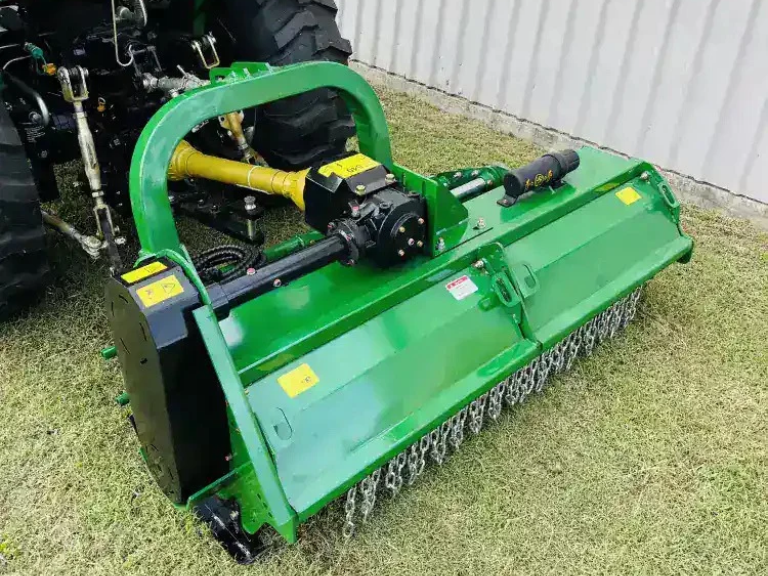
Further inland, bigger ticket implements tend to earn their place. A backhoe attachment is common on larger grazing properties for dam maintenance, yard work and trenching, jobs that come up often enough on a big property to justify owning the gear rather than hiring it in. AgKing’s single tine ripper, available with a 50mm poly pipe layer attachment, is a genuinely useful example of an outback specific job. Laying poly stock water lines across a paddock is a task that comes up far more often on a large grazing run than it does on a coastal hobby block. Fertiliser spreaders and disc harrows also see more work on bigger inland pasture programs, and bale grabs or bale spears become more useful once hay handling is a regular part of the operation rather than an occasional task.
Closer to the coast, the implement list looks a little different. A hydraulic post hole digger, which AgKing supplies with a standard 12 inch auger, gets a lot of use on smaller subdivided blocks, where fencing off a new paddock or yard is often one of the first jobs on a new property. Stick rakes and slashers help keep smaller paddocks and firebreaks tidy through a longer growing season, and a grader blade is genuinely useful for maintaining the kind of private gravel driveways and tracks that are common on hinterland lifestyle properties.
Warranty, parts and service across the state
Wherever your property sits, AgKing backs its tractors and implements with a genuine 36 month warranty and holds parts in Australia rather than relying on overseas shipping for common items. It’s worth knowing that this warranty is set up specifically for smaller acreage and hobby farm use rather than industrial, commercial or contractor work, so it’s worth checking how your property and workload line up with that before you buy, whichever end of the state you’re in.
Distance from support matters in both directions, just differently. On the coast, dealers and service support are usually a short drive away, with AgKing’s Queensland base in the Lockyer Valley near Brisbane, plus distributors in Seymour, Victoria and Wangara, Western Australia. Further west, the same network still applies, but the drive is longer, which is where holding parts in Australia and offering onsite diesel mechanics, or letting you use your own mechanic without affecting the warranty, makes more of a practical difference. NSW customers are currently serviced through the Queensland or Victorian teams, with delivery arranged Australia wide.

Coast versus outback at a glance
| Coastal and hinterland | Inland and outback | |
|---|---|---|
| Typical property size | A couple of acres up to around 20 to 30 acres | Hundreds to thousands of acres |
| Common climate factors | Higher rainfall, humidity, faster pasture growth | Heat, dust, lower and less frequent rainfall |
| AgKing and Enfly models that tend to suit | AK304, AK404, AK504, AKLZ554, DQ404, DQ554 | AK704, AK904 range, AK1304C, DQ904 |
| Tyre options worth considering | Wide Industrial Tyres, Turf Tyres | Standard Industrial Tyres, Agricultural Tyres |
| Cabin features that matter most | Comfort, general weather protection | Air conditioning, twin filter air intake, larger radiator |
| Implements that see the most use | Slashers, flail and finishing mowers, post hole diggers, stick rakes, grader blades | Backhoes, rippers with poly pipe layers, fertiliser spreaders, disc harrows, bale grabs and spears |
What if your property sits in between?
Most enquiries AgKing gets don’t come from the far coast or the far outback, they come from everywhere in between, and that’s a normal, easy situation to plan for. A block on the edge of a regional centre might get outback style dry spells for half the year and coastal style downpours for the other half. In that case, it usually comes down to whichever factor is the bigger daily problem on your particular property. If dust and heat are the thing that wears you and your gear down, lean toward the cabin and air intake features built for the west. If fast growing pasture and softer ground are the constant, lean toward the tyre and mowing implement choices built for the coast. AgKing’s team fields this exact question regularly and can talk through the trade offs based on your actual paddocks rather than a general rule of thumb.
Bringing it back to your property
If there’s one simple way to think about it, it comes down to two questions. How big is the area you’re actually working, and how far are you from town.
A smaller coastal or hinterland block, with regular rain and easy access to town, generally suits a lighter AgKing or Enfly model in the 30 to 55hp range, standard or turf tyres, and an implement set built around mowing, fencing and general upkeep. A larger inland or outback property, with heat, dust and real distance to contend with, generally suits the heavier end of the range from 70hp up to the 130hp AK1304C, a cabin model with air conditioning and a proper air intake setup, and implements built for bigger, less frequent jobs like ripping in water lines or maintaining dams.
The honest answer is that the right tractor depends on your specific block, not just which end of Queensland it happens to be in, so it’s worth talking through your property size, ground conditions and the jobs you actually need done with the AgKing team before deciding. They can match a model and implement package to your situation, not just your postcode.