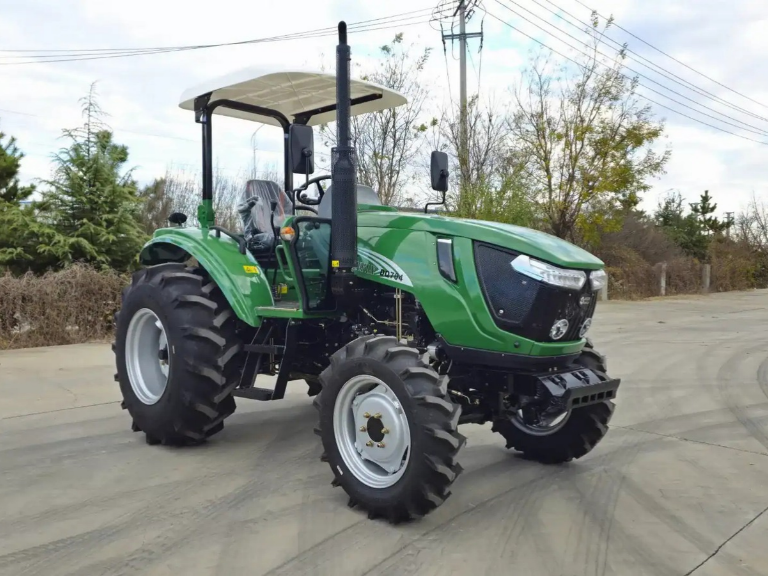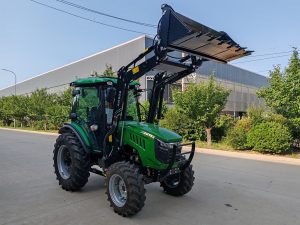
A tractor on its own doesn’t actually do much. Bolt the right implement onto the front or the back and it turns into a mower, a digger, a forklift, or a grader, depending on what the day calls for. That’s also where a lot of new owners get stuck, because AgKing’s range alone runs to dozens of implements across categories like mowing, earthworks, lifting, pasture care and general property upkeep, and it’s not always obvious which one matches the job in front of you, especially if you’re buying your first tractor and trying to work out what to add to the package straight away versus what can wait.
This guide skips the product list and starts with the work instead. Work out what you’re actually trying to do, then read the matching section below.
If you need to clear, mow or manage growth
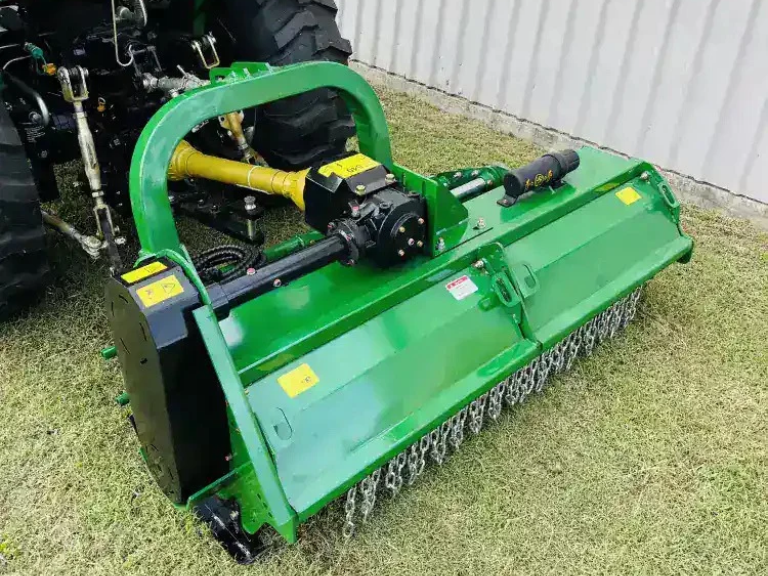
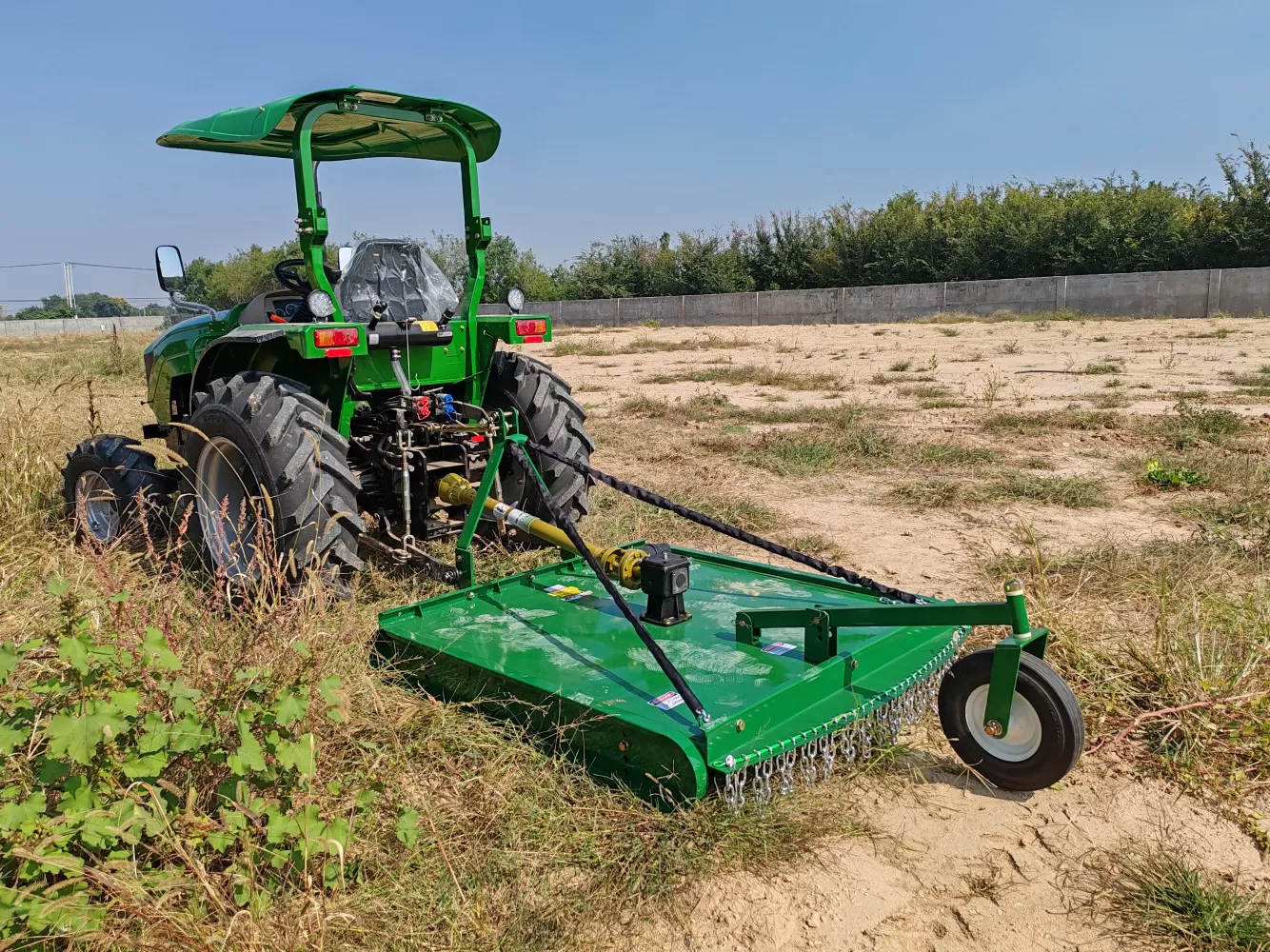
This is the job that comes up most often on almost any property, and it’s also where the most confusion happens, because AgKing sells three different mowing implements that all look like they do the same thing. A slasher (available in 4ft, 5ft and 6ft) uses fast spinning horizontal blades to knock down grass, weeds and light scrub, and it’s the cheapest and lowest maintenance option of the three. A flail mower (also in 4ft, 5ft and 6ft, with some models running up to 3m) uses a drum of small hammer blades to mulch material into fine pieces rather than throwing it, which makes it safer to use near driveways, fences or people, and some models add a hydraulic side shift for mowing under trees or along dam walls. A finishing mower (4ft, 5ft and 6ft, suited to 40hp and up) rides on its own wheels and is built for a clean, lawn quality cut around the house, gardens or driveway rather than rough paddock work.
If you only ever need to keep grass and light growth under control, a slasher covers most jobs at the lowest cost. If you’re mowing anywhere near people, fences or the road, or you want a genuinely finer cut, a flail mower is worth the extra spend. If you want your home lawn to actually look mowed rather than slashed, a finishing mower is the one built for that. For a full side by side comparison, including which one suits rougher paddocks versus which one suits a house lawn, it’s worth reading through the three properly before deciding.
If you need to dig, dam or move earth
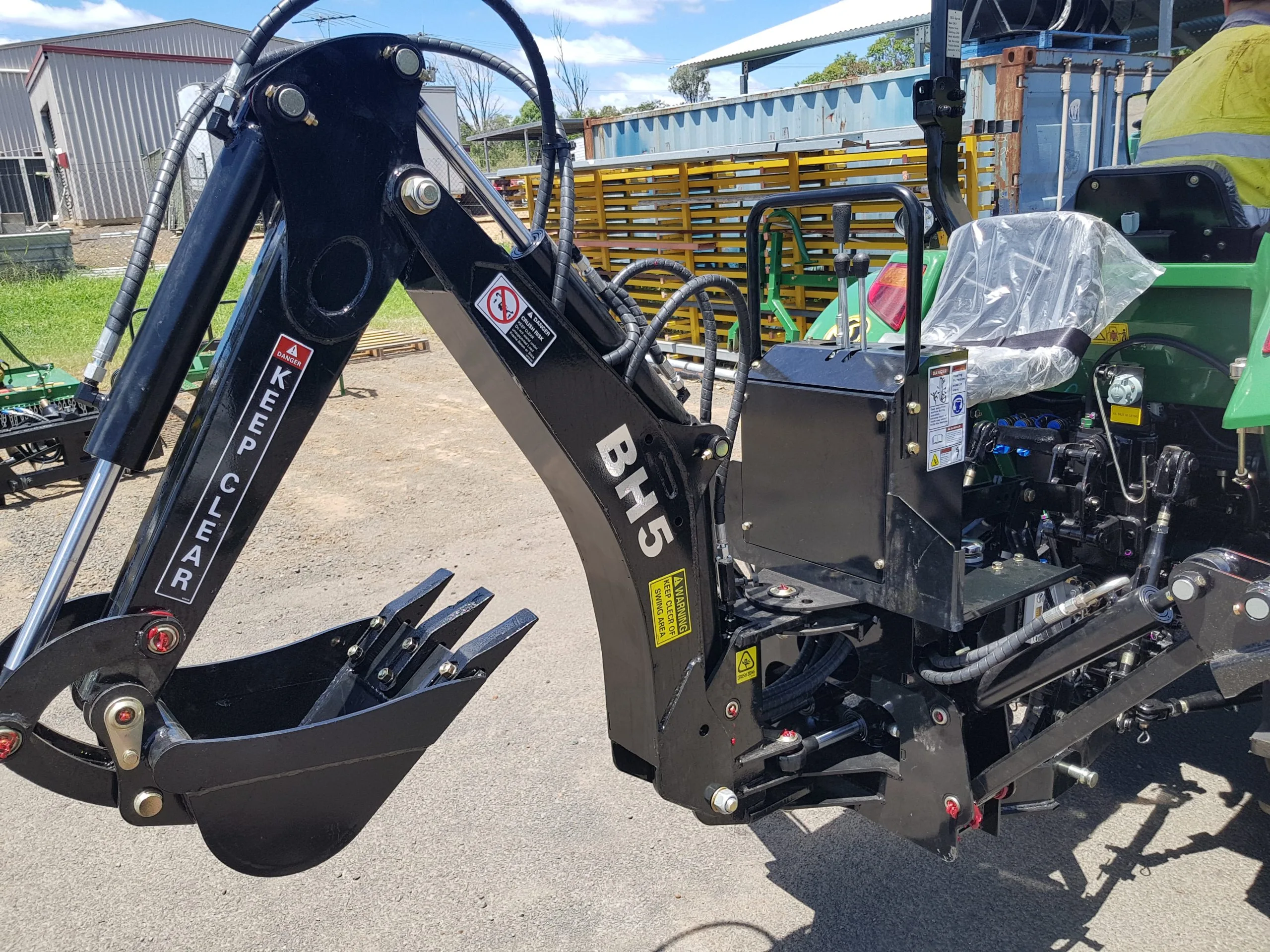
Earthworks jobs are where a tractor starts paying for itself against hiring in a contractor. AgKing’s backhoe attachment, the BH5, is a 3 point mounted unit fitted with a 300mm bucket and its own hydraulic PTO pump, so it doesn’t rely on the tractor’s own hydraulics to run. It suits digging, trenching and general excavation work such as dam maintenance, footings or removing stumps. For lighter grading and levelling jobs, a grader blade or tractor scraper (available in 5ft and 6ft, including a box scraper version with adjustable rippers and reversible cutting edges) is the better tool for driveway maintenance, levelling channel banks, building roadways or cutting drains, and several models come with tine rippers that break up the surface before the blade does its work. A hydraulic post hole digger, fitted with a standard 12 inch auger, is the go to for fencing projects, tree planting or setting posts, and a single tine ripper, which can be fitted with a 50mm poly pipe layer attachment, is genuinely useful if you’re laying stock water lines across a paddock rather than just breaking up compacted ground.
As a rough guide, reach for the post hole digger when the job is fence posts, the ripper when the job is breaking up hard ground or laying pipe, the grader blade when the job is your driveway or tracks, and the backhoe when the job is genuinely digging, such as a dam or a trench. A rock bucket, which fits the front end loader, is worth adding to that list too, since it’s built with tines or slots that let soil fall through while holding onto rocks and rubble, which makes clearing a paddock or building site a lot faster than picking material out by hand.
If you need to lift, carry or shift material
This is where a front end loader earns its keep, and it’s usually one of the first attachments a new owner adds. A front end loader, fitted with AgKing’s Euro quick hitch system, is used to scoop, carry and dump material, and most models pair with a 4 in 1 bucket that can also grab, level and dig a little on its own. From there, the loader becomes the base for a few other implements that all mount the same way. Pallet forks turn it into a small forklift for moving pallets, feed or building materials. A carry all gives you a flat, contained tray for hauling loose gear around the property without needing a trailer. A bale grab, which uses hydraulic rams to apply a gentle, firm grip, is built specifically to handle round bales and even delicate silage bales without tearing the wrap, while a bale spear does the same job for square or smaller bales that don’t need the same gentle handling. A log grab is the equivalent for fallen timber and storm clean up.
One thing worth knowing before you load any of these up: AgKing is upfront that a tractor’s front end loader has a genuine safe working load and a separate maximum lift load, and that overloading it with heavier rams or added wheel weights to squeeze out more capacity is a common way people damage the axle. Whatever you’re lifting, it pays to check the safe working load for your specific model rather than guessing.
If you’re preparing or maintaining pasture
Pasture and paddock work tends to use a different set of implements again. A tractor fertiliser spreader is built to distribute fertiliser evenly across pasture, which matters more than it sounds, since uneven spreading is one of the most common causes of patchy, striped looking paddocks. A disc harrow or drag harrow breaks up and levels soil, spreads manure and thatch, and helps prepare a seedbed or renovate tired pasture. A rotary hoe or rotary tiller does a similar job on a smaller, more intensive scale, turning over soil ahead of planting rather than working a whole paddock. A plough, available as either a trailing plough or a disc plough, is the heavier option for breaking new ground or turning over larger areas.
None of these are jobs every property needs regularly. If you’re running livestock on established pasture, a fertiliser spreader and an occasional pass with a harrow usually covers it. If you’re establishing new pasture, a garden, or cropping a paddock from scratch, the plough and rotary hoe start to earn their place. It’s also worth timing pasture work around the season rather than the calendar, since spreading fertiliser or harrowing right before rain gets far better results than doing it on a dry, hard paddock out of habit.
If you’re handling hay, timber or general jobs around the place
A few implements don’t fit neatly into the categories above but come up often enough to mention. A mini hay baler lets you cut and bale your own hay rather than buying it in, which suits a property that grows more grass than it can graze off. For timber, a log splitter and a log saw handle two different parts of the same job rather than doing the same thing twice, a log saw is built to cut fallen timber down to length, while a log splitter then works through those rounds to split them ready for the fireplace, so the two are often used together after a storm or during routine firewood prep rather than one replacing the other. A PTO wood chipper deals with branches and prunings without a burn off. A PTO cement mixer and a 3PL boom sprayer round out the general purpose end of the range, one for small concrete jobs like footings or post pads, the other for spot spraying weeds across a paddock rather than doing it by hand.
Matching an implement to your tractor
Every implement in AgKing’s range is built to suit a specific horsepower band, and it’s worth checking this before you buy rather than after. As an example, the 4ft slasher runs a gearbox rated at 45 horsepower and suits tractors between 20 and 45hp, while flail mowers are built across a much wider band, from 15hp right up to 100hp depending on the model. Most rear mounted implements use a standard category 1, 3 point linkage hitch and run off the tractor’s PTO, commonly rated at 540 RPM, so as long as your tractor and the implement are matched on both horsepower and hitch category, fitment generally isn’t an issue across the AgKing and Enfly range. Front end loader implements, by contrast, use the Euro quick hitch fitted across AgKing’s loader equipped models, which makes swapping between a bucket, forks and a grab a quick job rather than a tool change.
Ground conditions matter too, and this is where tyre choice comes in. Wide Industrial Tyres are worth considering on soft or sandy ground, Standard Industrial Tyres suit firmer, all round use, and Turf Tyres are the better pick if you’re mowing lawns regularly and want to avoid marking the grass. None of this needs to be worked out alone. If you tell the team what tractor you’re running, or planning to buy, they can confirm which implements in the range are a straightforward fit before you order.
Warranty and buying as a package
It’s worth knowing that AgKing’s implements carry their own genuine 12 month parts warranty, separate from the 36 month warranty on the tractors themselves, and like the tractor warranty it’s built around smaller acreage and hobby farm use rather than industrial, commercial or contractor work. Faulty parts are covered, normal wear and tear isn’t, and the specifics are provided with each implement rather than being identical across the whole range, so it’s worth checking the details for whichever implement you’re adding.
Buying a tractor and its first implement together as a package is usually the more straightforward route, since AgKing fully assembles implements before delivery rather than sending them out in pieces, which some competitors do to save on freight. It also means the loader, hitch and PTO are already confirmed to match before anything turns up at your gate. Adding implements later on is just as easy, since the Euro quick hitch and category 1, 3 point linkage fitted across the range are built to be compatible with implements bought down the track, not just the ones that came with the original package.
What’s worth owning versus hiring in
Not every implement needs to live in your shed. A slasher, a front end loader with a bucket, and a post hole digger cover the bulk of ordinary property upkeep and get used often enough to justify owning outright. A backhoe, a plough, or a mini hay baler tend to make more sense once you’re using them regularly, since they’re a bigger outlay for a more occasional job. Hay forks sit somewhere in between, genuinely useful if you’re feeding out regularly but overkill if you’re buying in small quantities of hay a few times a year. If you’re not sure yet how often something will actually get used, it’s worth talking it through with the AgKing team before committing, since they can point you toward a package that covers your immediate jobs without kitting out for work you may only do once a year.