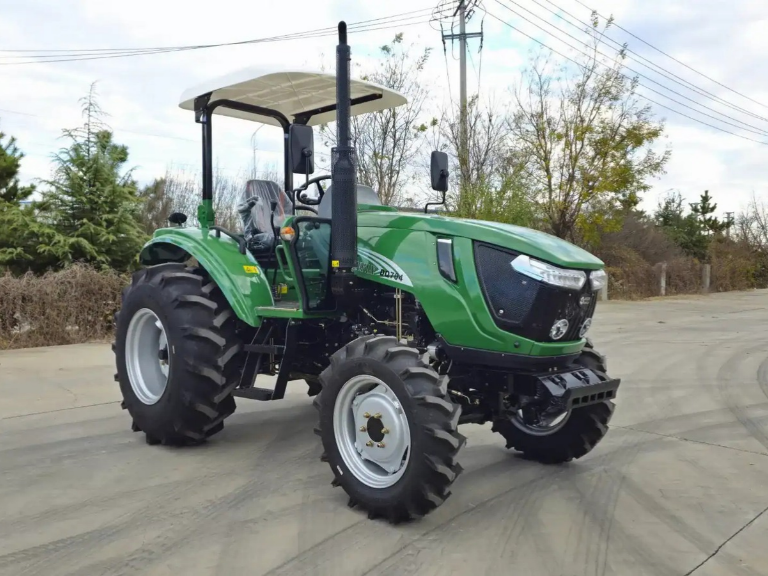
Ask three different people what they use to mow their paddock and you’ll probably get three different answers, because a slasher, a flail mower and a finishing mower all do a version of the same job in genuinely different ways. AgKing sells all three, in a few different sizes each, and while it’s tempting to just pick whichever one comes up first, buying the wrong one for your ground usually means either a rough, uneven cut or paying for capability you’ll never use.
This guide goes through what each implement actually is, where AgKing’s own range sits on specs and price, and which one suits which job, so you’re buying based on your paddock rather than whichever name sounds most familiar.
What a slasher actually does
A slasher, also called a rotary slasher or rotary cutter, uses fast spinning horizontal blades to cut down grass, weeds, bushes and light scrub, and it’s the workhorse of the three. AgKing’s range runs 4ft, 5ft and 6ft models. The 4ft slasher, model SDP120, gives a cutting width of around 1150mm from a 205kg unit built with a premium steel rotor and heat treated blades, a solid steel deck, and adjustable skids offering four cutting heights between 25mm and 100mm. It mounts on a standard category 1, 3 point linkage, runs off the tractor’s PTO at up to 540 RPM, and suits tractors between 20 and 45hp, with the gearbox itself rated at 45 horsepower. It comes with front and rear chain guards, PTO protection covers, a PTO shaft and an integrated slip clutch, finished in powder coat, and backed by a 12 month parts warranty. The 5ft and 6ft versions step up in cutting width to roughly 1.5 metres, both fitted with a PTO drive shaft, a slip clutch and a 15 inch solid rear support wheel, and both suit smaller to mid sized tractors rather than needing serious horsepower behind them.
Slashers are the cheapest and lowest maintenance of the three, which is a big part of why they’re the most common implement on Australian hobby farms. Their main job is pasture and field maintenance, keeping grass at a height that suits grazing and encourages healthy regrowth, and they’re just as commonly used for roadside and right of way maintenance, since a rougher cut is perfectly fine when the goal is visibility and access rather than presentation. The trade off is in how the blades work. Because a slasher cuts by spinning fast and swinging debris outward, it can throw sticks, stones and other material a fair distance, which is exactly why AgKing’s models come with chain guards front and rear as standard, and why a slasher is generally kept well away from driveways, parked cars, livestock and anyone standing nearby while it’s running.
What a flail mower actually does
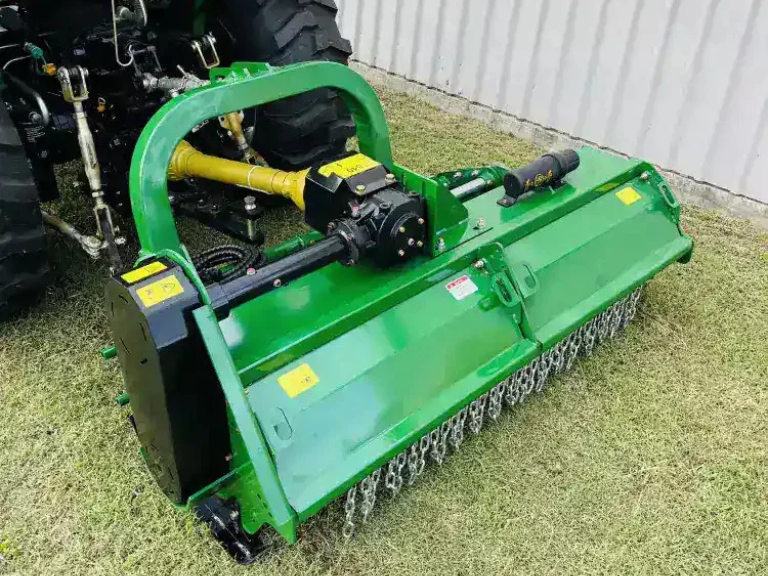
A flail mower works on a completely different principle. Instead of a couple of long blades spinning flat, it uses a rotating drum fitted with a large number of small hammer blades, and the housing directs the cutting action downward rather than outward. AgKing’s range spans 4ft, 5ft and 6ft models, with some flail mowers available up to 3 metres in cutting width, and the range as a whole is built to suit a much wider spread of tractors, from 15hp right through to 100hp. Cutting height is adjustable via skids between 20mm and 80mm. The Flail Mower 2000 side shift model, as an example, runs a balanced rotary 2000mm mill shaft carrying 32 hammer head blades, driven by three belts through greaseable bearings, and it’s built for tractors of 55hp and up. Several models, including that one, add a hydraulic side shift, which lets you offset the mower out from under the tractor’s own wheel line, genuinely useful for mowing under low tree canopies in an orchard or along the edge of a dam wall without driving through it.
The downward cutting action means a flail mower mulches material into fine pieces rather than throwing it, and it includes safety flaps specifically to prevent debris being ejected during operation, which matters if you’re mowing anywhere near a driveway, fence line or people. AgKing’s own product pages point out a practical bonus too, flail mowers take up roughly half the storage space of an equivalent slasher and are more manoeuvrable in tight areas, since the whole cutting drum sits closer to the tractor than a wide, flat slasher deck. That combination, a cleaner and safer cut plus a smaller footprint in the shed, is generally what buyers are paying the higher price for over a slasher of the same width.
What a finishing mower actually does
A finishing mower is built for a different result entirely. Rather than clearing rough growth, it’s designed to leave a clean, even, lawn quality cut, and AgKing is upfront on its own product page that if you’re dealing with rougher ground such as paddocks, a flail mower or slasher is the better tool for the job. The finishing mower range runs 4ft, 5ft and 6ft, suited to tractors of 40hp and up, with cutting blades set for a 1500mm cut and a PTO drive shaft supplied. It rides on its own wheels, which keep the deck riding level and stable over the ground rather than following every dip the way a rigidly mounted implement can, and that stability is exactly what produces the clean finish. It’s the pick for driveways, around vineyards, or general home lawn care, anywhere presentation matters as much as clearing the growth. Because it relies on those wheels for stability, it also needs reasonably even, obstacle free ground to do its best work, so it isn’t the right choice for a paddock scattered with rocks, stumps or uneven ground, even if that paddock is otherwise mowed regularly.
Slasher versus flail versus finishing mower, side by side
| Slasher | Flail mower | Finishing mower | |
|---|---|---|---|
| Cutting action | Fast spinning horizontal blades | Rotating drum of small hammer blades, cuts downward | Rotary blades on a wheeled deck |
| Best for | Pasture, paddocks, roadsides | Rough growth near people, fences or trees | Lawns, driveways, presentation cutting |
| AgKing sizes | 4ft, 5ft, 6ft | 4ft, 5ft, 6ft, up to 3m on some models | 4ft, 5ft, 6ft |
| Tractor HP range | 20 to 45hp | 15 to 100hp | 40hp and up |
| Cut finish | Rougher, can throw debris | Fine mulch, minimal throw | Clean, even, lawn style |
| Storage and manoeuvring | Wide, flat deck | Roughly half the storage space of a slasher | Wheeled deck, needs open ground to turn |
| Starting price | From around $1,850 | From around $3,100 | From around $2,200 |
Which one actually suits your paddock
If most of what you’re cutting is open pasture or paddock grass and you don’t need a manicured finish, a slasher does the job at the lowest cost and the least ongoing maintenance. If you’re mowing anywhere near fences, driveways, livestock or people, or you want a genuinely finer cut without upgrading to a finishing mower, a flail mower is worth the extra spend, and the hydraulic side shift models are particularly useful if you’ve got trees, dams or tight corners to work around. If the area in question is your actual lawn, the garden, or anywhere first impressions matter, a finishing mower is the only one of the three actually built to leave that kind of cut, and running a slasher over a home lawn will leave it looking exactly like what it is, paddock cut rather than mowed.
Running costs and upkeep over time
The purchase price is only part of the comparison, since the three implements also differ in what they cost to keep running. A slasher’s blades are simple, flat cutting blades that eventually dull or chip on rocks and stumps, and they’re straightforward and relatively cheap to replace or sharpen, which keeps ongoing costs low even with regular use. A flail mower carries far more individual hammer blades across its drum, and while any single blade is cheap, a full set costs more to replace than a slasher’s blades do, though the trade off is that flail blades tend to handle the odd stick or small rock without the same damage a slasher blade would take, since they’re designed to swing back on impact rather than take a direct hit rigidly. A finishing mower’s blades sit closer to typical mower blades and need to stay sharp to keep delivering a clean cut, so they’re checked and replaced more like a quality lawn mower than a paddock implement, which usually means more frequent attention if it’s being used often, but on a smaller cutting area than a slasher or flail mower would cover. Across all three, keeping blades sharp and skids set correctly does more for cut quality than horsepower does, so it’s worth building a quick blade check into the routine rather than only thinking about it once the cut starts looking rough.
What should actually drive the decision
A handful of practical factors tend to matter more than personal preference once you sit down and work through them. Property size and how much ground actually needs cutting each pass points toward a slasher or flail mower for anything beyond a small lawn area, simply because a finishing mower’s lower ground clearance and wheeled deck aren’t built for large scale paddock work. How close you’re mowing to fences, roads, driveways or other people matters just as much, since that’s where a flail mower’s contained, downward cutting action earns its higher price over a slasher’s wider throw radius. Budget plays its part too, a slasher is the cheapest way to keep a property under control, while a flail mower and finishing mower both ask for a bigger upfront spend in exchange for a cleaner result. Finally, it’s worth being honest about how often the area actually gets mowed, since a finishing mower earns its keep on a lawn that’s cut weekly through the growing season, but makes far less sense for an area that only gets attention a few times a year.
Can you get away with owning just one?
Plenty of properties run all three, using the slasher for the bulk of the paddock, a flail mower for anything close to the house or a fence line, and a finishing mower for the lawn itself, but that’s not always necessary starting out. If your property is mostly working paddock with only a small area around the house, a slasher plus a smaller finishing mower for the lawn covers most situations without the flail mower’s extra cost. If safety and a finer cut matter more than budget, for example on a smaller subdivided block close to neighbours, a flail mower alone can often cover both the rough areas and a reasonably tidy lawn, just not to finishing mower standard. What doesn’t tend to work well is trying to make a slasher do a finishing mower’s job, or a finishing mower handle genuinely rough, overgrown ground, since both start to struggle and wear out faster outside the conditions they’re built for. A tractor and implement package bought together also makes it easier to add the second or third mower later, since the hitch and PTO are already confirmed to match rather than something you need to check again from scratch.
If you’re not sure which combination suits your specific property, it’s worth talking it through with the AgKing team along with your tractor’s horsepower, since that alone rules a few options in or out before you get to personal preference. It’s also worth mentioning what you’re mowing around, fence lines, dams, sheds or livestock, since that detail changes the recommendation just as much as paddock size does.