A rotary hoe is one of those implements that quietly does a lot of the heavy lifting on a property but gets confused with half the other tillage tools in the shed. People call it a tiller, a rotavator, a mulcher, even a cultivator, and most of those names overlap with another implement that does something slightly different. If you’ve been looking at rotary hoes and you’re not sure whether it’s the right call, this guide works through what the tool actually does, when you want one, how to size it to your tractor, and the mistakes that chew through tines well before they should wear out.
What a rotary hoe actually does
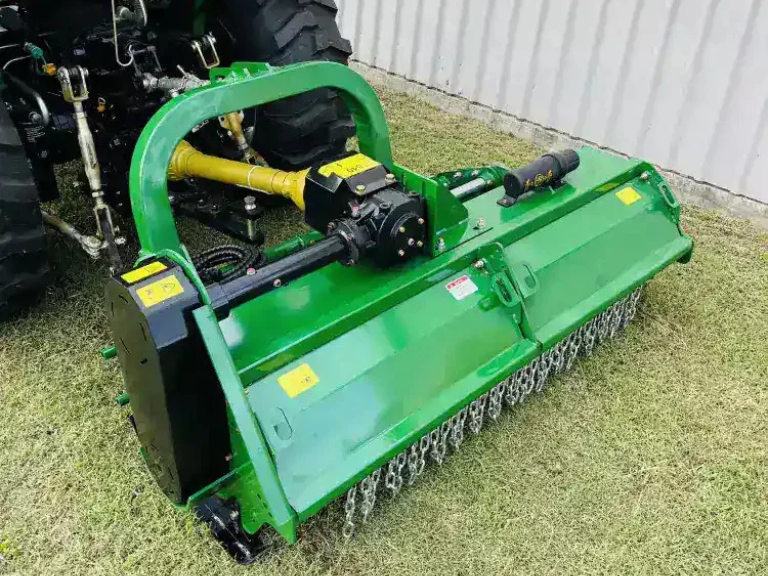
A rotary hoe uses a set of curved steel tines bolted to a horizontal rotor that spins against the direction of travel, powered by the tractor’s PTO through a gearbox. As the tractor moves forward, the tines bite in, chop the soil into small pieces, and leave behind a loose, aerated layer that sits ready for seed. That’s the whole job. It isn’t ploughing, which turns soil over in slices and is usually a deeper, slower operation. It isn’t harrowing either, which drags across the surface and breaks up clods after something else has done the primary cultivation. A rotary hoe sits between those two.
The useful way to think about it is that a plough turns the soil, a harrow smooths it, and a rotary hoe mixes it. If you’ve got a patch that’s been ploughed or is already loose and you want it fine enough to plant into, a rotary hoe gets you there in one pass. If you’ve got rough, compacted or heavily rooted ground, the rotary hoe isn’t your first move.
When a rotary hoe is the right tool
The rotary hoe earns its spot in the shed for a short list of jobs. Each of these is where it genuinely beats the alternatives.
Seedbed preparation on small to medium plots. Market gardens, vegetable patches, flower beds, hay plots and small cropping paddocks all benefit from the fine, aerated finish a rotary hoe leaves behind. You can usually get planting straight after a pass, without needing a second implement to smooth the surface.
Soil mixing when you’ve added compost, manure or lime. Spreading amendments on the surface only helps so much. A rotary hoe pulls them down into the top 100 to 200mm of soil where roots can actually reach them. This is the fastest way to work compost through a vegetable bed or to lime through a tired paddock.
Pasture renovation on smaller paddocks. If a paddock has gone backwards from compaction, weeds or neglect and you want to resow, a single pass with the rotary hoe churns the top layer, breaks up thatch and gives new seed a chance to germinate. On large paddocks you’d use a plough and a harrow, but for anything up to a few acres the rotary hoe is faster and more thorough.
Post harvest cleanup on cropping blocks. Crop stubble, leftover weeds and spent root systems all need dealing with before the next crop goes in. A rotary hoe cuts them in and gets the soil into a workable state for the next planting.
Weed control through disturbance rather than chemistry. Running a shallow pass through a bed before weeds establish disturbs the seedbank and sets them back without needing a spray. It isn’t a magic fix, but it’s a genuine tool for anyone trying to keep chemical use down.
When something else is the better call
Some jobs look like rotary hoe jobs on the surface and aren’t. Sending the wrong implement at them either damages the implement or wastes an afternoon.
If the ground is rock hard and hasn’t been worked in years, a tractor ripper or a plough goes first. The rotary hoe isn’t designed to break virgin or heavily compacted ground on its own. Running one at that kind of soil ends with bent tines, slipped belts or a snapped gearbox shaft.
If you’ve got thick, tall grass or standing weeds, a slasher or flail mower knocks them down first. A rotary hoe wraps up in long material and either stalls, snaps a belt or chews through a shear bolt. Mow, wait a few days, then hoe.
If the paddock is studded with stones, sticks or buried rubbish, the rotary hoe’s tines will find every single one of them. A harrow or a stone rake deals with surface debris first.
And if you’re trying to level a driveway or shape a paddock, that’s a grader blade or a box blade job. A rotary hoe chews, it doesn’t shape.

Matching a rotary hoe to your tractor
The single most common mistake people make with rotary hoes is running one that’s wider than their tractor can comfortably drive. The implement will fit on the 3 point linkage, the PTO will spin, and it’ll look like it’s working. What actually happens is the tractor struggles for traction, the engine labours, the gearbox overheats, and the tines don’t go deep enough to do a proper job.
The horsepower bands worth knowing roughly are these. A 4ft rotary hoe suits a tractor in the 20 to 35 horsepower range. A 5ft rotary hoe suits 35 to 50 horsepower. A 6ft rotary hoe suits 50 to 75 horsepower. A 7ft or 8ft commercial rotary hoe steps up again into the 75 horsepower and above bracket. These bands aren’t fixed to the millimetre, but if you’ve got a 40 horsepower tractor and you’ve been looking at a 6ft rotary hoe, that’s a sign to pause and either drop down a size or step up the tractor.
Weight matters almost as much as power. A rotary hoe pushes back hard against the tractor during the cut, and a light tractor at the top of a size band will skip and bounce rather than hold the depth you set. If your tractor is right at the lower limit of the implement’s band, fitting rear wheel weights or liquid ballast is worth the spend.
PTO speed matters too. Most rotary hoes in this range run at 540 RPM, which matches the standard PTO on every tractor in the AgKing range. Confirm the spec rather than assuming, because running the wrong PTO speed is a fast way to damage the gearbox.
How to run one properly
Operating a rotary hoe isn’t complicated, but there are four things that separate a good finish from a torn up mess.
Drive slowly. Rotary hoes work best at low ground speeds, typically between 2 and 5 km/h. Faster than that and the tines don’t get enough bites per metre, leaving ridged, poorly cut soil behind. Slower and you’re just wasting fuel. First and second gear low range is usually the sweet spot.
Set the depth gradually. On ground that hasn’t been worked, don’t drop the hoe straight to full depth. Make a pass at 75mm, then another at 150mm, then a third at full depth if you need it. Trying to go full depth cold is how tines bend and gearboxes let go.
Keep the implement level. The top link adjustment on the 3 point linkage tilts the rotor fore and aft. If it’s tilted forward, the front of the rotor digs and the back skips. If it’s tilted back, the back digs and the front skips. Level is the goal, which you can eyeball by making sure the top edge of the rotor cover sits parallel to the ground.
Overlap your passes. A rotary hoe’s effective cut is slightly narrower than its physical width because the end tines flick soil sideways. Overlap by about 100mm on each pass to avoid leaving untilled strips between runs.
Tine wear, shear bolts and the boring bits of ownership
Rotary hoe tines wear out. On sandy or stony soil, a set might last one or two seasons of moderate use. On clean, well prepared ground, they last considerably longer. The signal that they need replacing is a drop in cut quality: the finish gets coarser, the implement vibrates more, and the depth starts to pull up to the surface even when the setting is the same. Replacing tines is a straightforward bolt swap, and AgKing holds parts in Australia rather than making you wait on a shipment from overseas.
Shear bolts on the PTO shaft are a protective feature, not a defect. If the tines hit a rock or a buried root that won’t give way, the shear bolt snaps instead of the gearbox. Keep spare shear bolts in the toolbox and know how to swap one. Running the wrong grade of bolt instead of the replacement is a common cause of destroyed gearboxes.
Grease points get skipped more often than any other part of maintenance. A quick grease round before the first pass of the day takes two minutes and significantly extends the life of the bearings. The gearbox oil level also needs a check before use, especially on a new or newly delivered implement.
Buying through AgKing
Rotary hoes in AgKing’s range come assembled, tested and ready to bolt on, rather than flat packed in a crate. That saves a day of workshop time and avoids the situation where a crate arrives and a bolt or a bearing is missing. Delivery works Australia wide from the Queensland, Victoria and Western Australia distribution points, with new stock arriving every four weeks.
If you’re adding a rotary hoe to a fresh tractor purchase, buying it as part of a tractor package is usually the cleaner route. The team will match the hoe width to your tractor’s horsepower and weight, confirm the PTO speed and 3 point category are a match, and set the lot up so it works from day one. If you’ve already got a tractor and you’re adding a hoe later, a quick call with your model number is enough for the team to point you to the right size.
For a broader look at which implements earn their spot on a hobby farm and which ones can wait, the implements guide covers the full range by job type. And if this is a first tractor purchase, the first timer buying mistakes post is worth a read before placing an order.
Frequently asked questions
Q. Is a rotary hoe the same as a rotary tiller?
They’re the same implement under two different names. Rotary hoe is the term used more often in Australia, rotary tiller is the term used more often in North America. The tool is identical. If you see one listed as a rotavator, that’s also the same thing, usually using a brand name that stuck.
Q. How deep can a rotary hoe actually go?
Most rotary hoes in the 4ft to 6ft range work to a depth of 100 to 200mm, with some heavy duty units reaching 250mm. The practical limit isn’t the implement, it’s the tractor’s weight and power. A light tractor at the top of a horsepower band won’t hold full depth even if the hoe is capable of it.
Q. Can I use a rotary hoe on wet soil?
Working wet soil with a rotary hoe is one of the fastest ways to damage soil structure. The tines smear and compact wet clay rather than fracturing it, leaving you with worse soil after the pass than before. Wait until the soil crumbles in your hand when squeezed rather than forming a ball.
Q. How often do rotary hoe tines need replacing?
On sandy or stony soil, a set might last one or two seasons of moderate use. On clean, well prepared ground, tines can last many years. The honest answer is you’ll know when the finish quality drops off and the implement starts bouncing rather than cutting.
Q. Do I need a rotary hoe if I already own a plough?
They do different jobs. The plough turns soil in slices and handles primary cultivation on heavier or untouched ground. The rotary hoe mixes and finishes soil that’s already been worked. On many properties, both earn their place. If budget is tight and you only crop small areas, the rotary hoe alone can cover the work. If you’re breaking new ground regularly, the plough is the one you can’t substitute.